
Customs clearance is one of the most important steps in international shipping. For importers, exporters, manufacturers, and trading companies, a delay at customs can affect delivery schedules, production planning, inventory availability, and customer commitments.
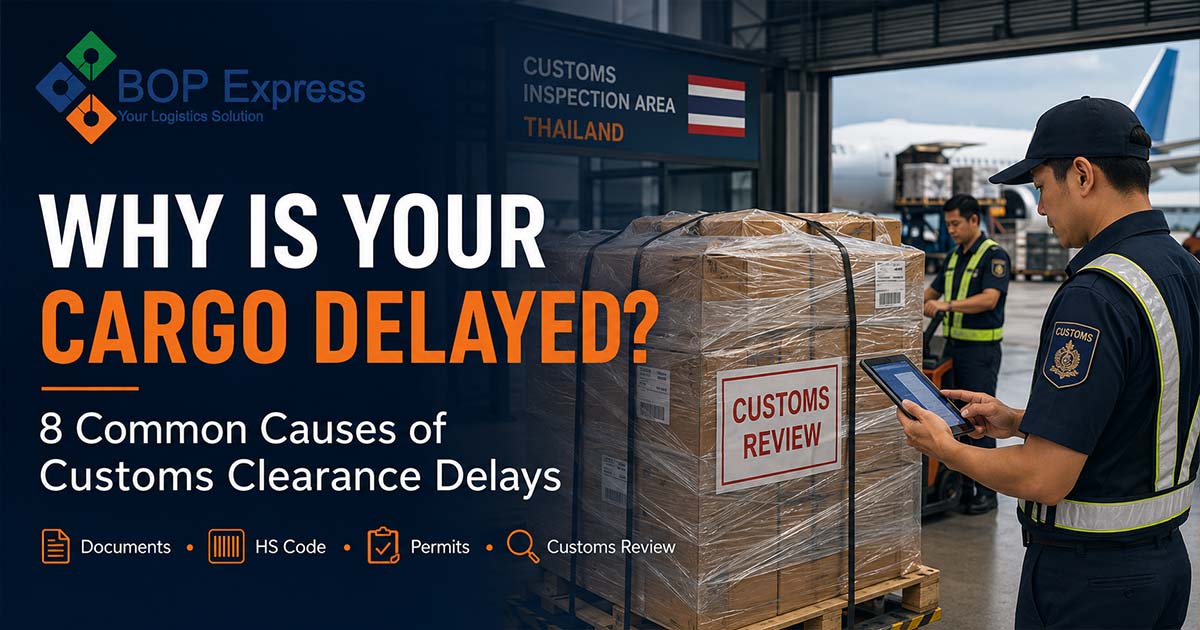
In many cases, customs clearance delays are not caused by transportation alone. They may come from incomplete documents, unclear cargo information, incorrect product classification, missing permits, or differences between shipping documents and the actual cargo.
While not every delay can be fully controlled, businesses can reduce avoidable risks by preparing shipment information, trade documents, and cargo details more carefully before the shipment begins.
This article explains common causes of customs clearance delays and what businesses should prepare before importing or exporting goods.
Why Customs Clearance Delays Matter
A customs clearance delay can affect more than the arrival date of a shipment. It may create additional storage charges, demurrage, detention, trucking rescheduling, production delays, or customer service issues.
For businesses that rely on imported raw materials, spare parts, machinery, or finished goods, customs delays can directly affect operations. For exporters, delays may impact delivery commitments, buyer relationships, and shipment schedules.
That is why customs clearance should not be treated as a final administrative step. It should be planned from the beginning of the shipment process.
1. Incomplete Shipping Documents
For businesses that are still preparing shipment details, reviewing what information should be prepared before requesting a freight quote can also help reduce document-related issues from the beginning.
One of the most common reasons for customs clearance delays is incomplete documentation.
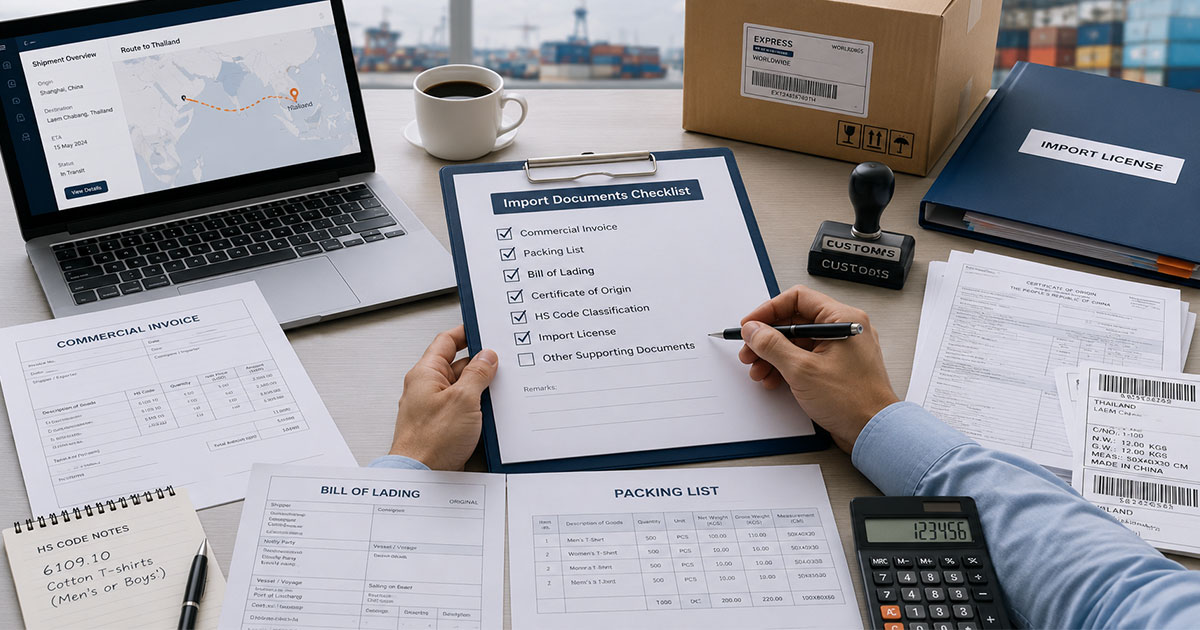
International shipments usually require several documents, such as a commercial invoice, packing list, bill of lading or air waybill, import or export declaration, and other supporting documents depending on the product type and destination.
If any required document is missing, unclear, or not available at the right time, the customs clearance process may be delayed.
Businesses should check whether the following documents are ready before shipment:
- Commercial invoice
- Packing list
- Bill of lading or air waybill
- Import or export declaration
- Certificate of origin, if applicable
- Import or export license, if required
- Product catalogue or specification, if needed
- Insurance document, if required
- Other certificates required by product type
Document requirements can vary depending on the product, country, customs regulation, and trade terms. Therefore, the document list should be reviewed before the shipment is confirmed.
2. Information Mismatch Between Documents
Even when all documents are available, delays can still occur if the information does not match across documents.
For example, the commercial invoice may show one product description, while the packing list uses a different name. The weight on the packing list may not match the bill of lading. The number of packages may differ between documents. The declared value may not align with the commercial invoice.
These inconsistencies may lead to additional questions, document correction, or further review.
Businesses should check that key details are consistent across all shipping documents, including:
- Company names and addresses
- Product description
- Quantity
- Number of packages
- Gross weight and net weight
- Dimensions
- Invoice value
- Currency
- Incoterms
- Origin and destination details
Before submitting documents for customs clearance, businesses should make sure the information is aligned and easy to verify.
3. Unclear Product Description
A vague product description can create customs review issues.
Descriptions such as “parts,” “equipment,” “accessories,” “materials,” or “samples” may not provide enough information for customs classification and documentation review. Customs-related parties may need to understand what the product is, what it is made of, how it is used, and whether it is subject to specific controls.
A clearer product description may include:
- Product name
- Main material
- Function or intended use
- Model number, if available
- Brand, if relevant
- Whether the product is new or used
- Technical details, if required
For machinery, chemicals, electronics, food products, medical-related products, and controlled goods, a clear description is especially important.
4. Incorrect or Unconfirmed HS Code
The HS Code is used for product classification in customs procedures. It may affect duty rates, taxes, import restrictions, required permits, and supporting documents.
If the HS Code is incorrect or has not been reviewed properly, the shipment may face questions during customs clearance. In some cases, the customs team may request additional information, product catalogues, technical documents, or clarification before proceeding.
Businesses should avoid guessing the HS Code based only on a general product name. Instead, product material, usage, technical details, and official classification should be reviewed carefully.
If the HS Code is not confirmed, businesses should prepare supporting information such as:
- Product specification
- Catalogue
- Technical drawing
- Material details
- Usage explanation
- Photos of the product
- Previous import records, if available
Accurate classification helps reduce confusion and supports smoother documentation review.
5. Missing Import or Export Permits
Some goods may require permits, licenses, certificates, or approvals from relevant authorities before import or export.
This can apply to certain categories such as food products, chemicals, medical devices, cosmetics, electronics, controlled goods, machinery, or other regulated products. The exact requirement depends on the product type, HS Code, origin, destination, and applicable regulations.
If permits or approvals are not ready before shipment arrival, customs clearance may be delayed.
Businesses should check permit requirements before confirming the shipment, not after the cargo has already arrived.
6. Incorrect Cargo Value or Invoice Details
The commercial invoice is an important document for customs review. If the invoice value, payment terms, currency, product description, or buyer-seller information is unclear, customs clearance may require additional clarification.
Common invoice-related issues include:
- Missing invoice number or date
- Unclear product description
- Incorrect quantity
- Incorrect unit price or total value
- Currency not stated clearly
- Incoterms not shown
- Buyer or seller information mismatch
- Value that does not align with other supporting documents
Businesses should ensure the invoice reflects the actual transaction and matches the supporting documents.
7. Incoterms Not Clearly Defined
Incoterms help define responsibilities between buyer and seller in international trade. They affect who is responsible for freight charges, insurance, export clearance, import clearance, duties, taxes, and final delivery.
If the Incoterms are not clearly stated, there may be confusion about which party is responsible for which part of the shipment.
For example, EXW, FOB, CIF, DAP, and DDP each create different responsibilities for buyers, sellers, and logistics providers.
When preparing for customs clearance, businesses should make sure the agreed trade term is shown clearly on the commercial invoice and communicated to the logistics provider.
8. Cargo Arrives Before Documents Are Ready
Another common issue is timing.
In some cases, the cargo arrives at the port, airport, or border checkpoint before all required documents are ready. This can cause delays in customs declaration, cargo release, delivery scheduling, and final transport.
To reduce this risk, businesses should prepare documents before shipment arrival and coordinate with all parties early, including the supplier, buyer, freight forwarder, customs broker, carrier, and consignee.
Important timing details include:
- Cargo-ready date
- Departure date
- Estimated arrival date
- Document submission deadline
- Permit approval timeline
- Delivery schedule
- Free time at port or terminal, if applicable
Customs planning should be done before the shipment arrives, not after.
9. Special Cargo Requirements Not Communicated Early
Some shipments require special handling or additional review.
Examples include:
- Dangerous goods
- Chemicals
- Food products
- Temperature-sensitive cargo
- Medical-related products
- High-value cargo
- Oversized cargo
- Heavy equipment
- Used machinery
- Cargo requiring inspection
- Goods delivered to restricted areas
If these requirements are not communicated early, the logistics provider may not be able to prepare the right documents, handling method, or route plan in time.
Businesses should inform the logistics team of any special cargo conditions from the beginning.
10. Importer or Exporter Registration Issues
For commercial import or export activities, the importer or exporter may need to be properly registered or authorized to proceed with customs-related procedures.
If the business information, registration status, tax information, or authorized party details are not ready, customs clearance coordination may be delayed.
Before the first shipment, businesses should confirm whether they are ready to act as importer or exporter of record and whether the required customs-related setup has been completed.
11. Communication Gaps Between Parties
International shipping usually involves several parties: buyer, seller, freight forwarder, customs broker, carrier, warehouse, trucking provider, and sometimes government agencies.
If shipment information is not shared clearly between these parties, delays may happen.
Common communication gaps include:
- Supplier sends documents late
- Buyer does not confirm Incoterms
- Product details are incomplete
- Logistics team receives incorrect cargo dimensions
- Permit status is not updated
- Delivery site requirements are not shared
- Contact person is not available during customs review
A clear communication flow helps reduce avoidable delays.
How Businesses Can Prepare Before Customs Clearance
Businesses can reduce customs clearance risks by preparing the following before shipment:
- Confirm the correct product description
- Review HS Code and product classification
- Prepare commercial invoice and packing list
- Check bill of lading or air waybill details
- Confirm Incoterms
- Check whether permits or licenses are required
- Prepare product specifications or catalogues
- Confirm cargo value and currency
- Share accurate weight and dimensions
- Communicate special handling requirements
- Confirm importer or exporter information
- Coordinate with the logistics provider before shipment arrival
Good preparation does not guarantee that every shipment will be cleared without delay, but it helps reduce problems caused by missing information, unclear documents, or late coordination.
How BOP Express Supports Customs Clearance Preparation
For businesses involved in import, export, freight forwarding, air freight, sea freight, cross-border logistics, or inland transportation, customs preparation should be part of the shipment planning process from the beginning.
Businesses that need support across international shipment planning can explore BOP Express freight forwarding services for coordination, documentation support, and delivery planning.
BOP Express supports business customers with logistics coordination, customs clearance support, shipment documentation review, freight forwarding, and delivery planning based on the shipment details provided.
For import-export shipments that require customs coordination, BOP Express can support customs clearance preparation based on the cargo details and documents provided.
By preparing cargo details, documents, and timelines early, businesses can work more effectively with the logistics team and reduce avoidable customs-related issues.
Talk to BOP Express
If your business is preparing an import, export, or cross-border shipment, BOP Express can help review the logistics requirements and support the planning process.
If your team needs to review shipment documents or discuss possible customs-related issues, you can contact BOP Express before confirming the shipment.
Contact BOP Express to discuss your cargo details, documents, route, and expected timeline before confirming your shipment.