International trade involves more than sending goods from one country to another. Each shipment usually requires coordination between the exporter, importer, freight forwarder, shipping line, customs broker, port operator, transport provider, and related authorities.
For businesses that import or export goods by sea freight, understanding the overall process can help reduce delays, avoid documentation issues, and improve coordination across the supply chain.
The exact process may vary depending on the product, origin country, destination country, Incoterms, shipping route, carrier requirements, and customs regulations. However, the following steps provide a practical overview of how a typical sea freight shipment moves from exporter to importer.
Step 1: Exporter Prepares Goods and Shipment Documents
The process usually starts at the exporter’s factory, warehouse, or place of business.
Once the goods are ready for export, the exporter prepares the required commercial and shipping documents. These may include documents such as a commercial invoice, packing list, export-related documents, product certificates, or other documents required by the destination country.
At this stage, the exporter may contact a freight forwarder or shipping line to arrange the shipment.
Step 2: Booking Freight with a Freight Forwarder or Shipping Line
After the goods are ready, the exporter or its representative books freight space with a freight forwarder or shipping line.
For sea freight, the booking usually confirms key shipment details such as:
- port of loading
- port of discharge
- vessel schedule
- container type
- cargo details
- cut-off date
- estimated departure date
- estimated arrival date
- shipping route
- freight terms
Once the booking is accepted, the exporter receives a Booking Confirmation.
Step 3: Transporting Goods to the Port of Loading
After receiving the Booking Confirmation, the exporter arranges inland transportation from the exporter’s location to the port of loading.
The goods must arrive within the timeline stated in the booking. Missing the cut-off time may cause the shipment to be delayed to another vessel schedule.
This step requires coordination between the exporter, truck provider, warehouse team, freight forwarder, and port-related parties.
Step 4: Export Customs Clearance
Before goods leave the exporting country, the exporter must complete export customs clearance.
The exporter may handle the process directly or appoint a customs broker to prepare and submit the export declaration.
Documents commonly involved may include:
- export declaration
- commercial invoice
- packing list
- export license or permit, if applicable
- product certificates, if required
- other supporting documents depending on the product type
The required documents may vary depending on the country, product category, shipment value, and export regulations.
Step 5: Loading Cargo on Board and Issuing the Bill of Lading
Once the goods arrive at the port of loading and export customs clearance is completed, the shipping line or carrier arranges for the container or cargo to be loaded onto the vessel.
After the cargo has been received or loaded according to the shipping arrangement, the carrier or its authorized representative issues the Bill of Lading.
The Bill of Lading is an important transport document in sea freight. It confirms shipment details and may be used for cargo release at destination, depending on the type of B/L and release method.
At origin, the exporter may also need to pay freight and local charges according to the agreed shipping terms.
Step 6: Vessel Arrives at the Port of Discharge
When the vessel arrives at the destination port, the shipping line arranges cargo discharge from the vessel.
The importer or its appointed representative must coordinate with the shipping line or destination agent to handle destination charges and cargo release procedures.
In many cases, the importer uses the Bill of Lading or related release instruction to obtain a Delivery Order from the shipping line or agent.
The Delivery Order is an important document for taking delivery of the cargo from the port or terminal.
Step 7: Import Customs Clearance and Duty Payment
Before the importer can take the goods out of customs control, import customs clearance must be completed.
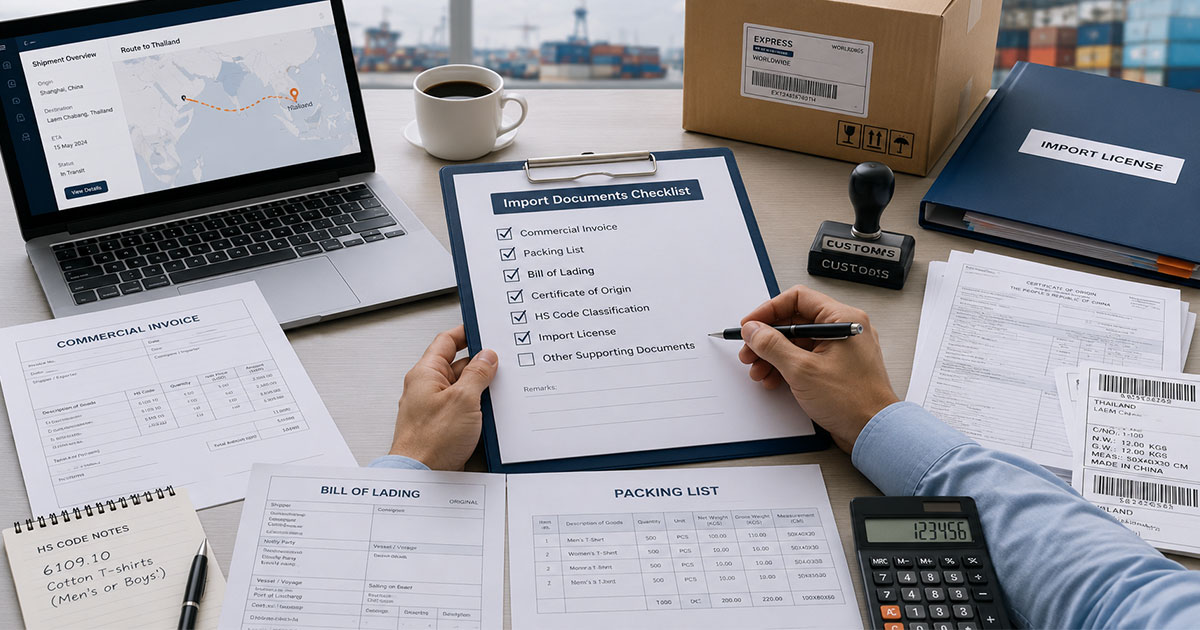
The importer or appointed customs broker prepares and submits the import declaration with supporting documents.
Common documents may include:
- import declaration
- commercial invoice
- packing list
- bill of lading
- delivery order
- import license or permit, if applicable
- certificate of origin, if applicable
- insurance document, if required
- other documents depending on product regulations
If duties, taxes, or other import charges apply, they must be paid according to the requirements of the destination country.
Step 8: Cargo Release and Inland Transportation
After import customs clearance is completed and cargo release is approved, the importer arranges inland transportation from the port or terminal to the importer’s warehouse, factory, or final delivery location.
This step may involve trucking, container pickup, container return, warehouse receiving, and final delivery coordination.
Timing is important because delays at destination may create extra charges such as storage, demurrage, detention, or other port-related costs.
Step 9: Cargo Inspection at Destination
When the goods arrive at the importer’s location, the importer should inspect the cargo condition before confirming receipt.
Important points to check include:
- number of packages
- cargo condition
- visible damage
- seal condition, if applicable
- packaging condition
- product quantity
- consistency with packing list and invoice
If damage or shortage is found, the importer should record evidence and notify the relevant parties as soon as possible.
Why Coordination Matters in Import-Export Shipments
An international shipment involves many parties and time-sensitive steps. A delay or error in one stage may affect the rest of the process.
Common issues may include:
- incorrect shipment documents
- missed vessel cut-off
- incomplete customs information
- unclear release method
- late payment of destination charges
- missing import permit
- cargo release delays
- poor communication between parties
For this reason, businesses should plan import-export shipments carefully and coordinate with experienced logistics partners.
Working with a Freight Forwarding Partner
A freight forwarding partner can help businesses coordinate many parts of the import-export process, including shipment booking, carrier communication, transport planning, document checking, and customs-related coordination.
For businesses that do not handle international shipments regularly, working with a logistics partner can reduce avoidable mistakes and make each step clearer.
The right logistics partner should help the business understand the process, prepare key information, and coordinate the shipment from origin to destination more systematically.