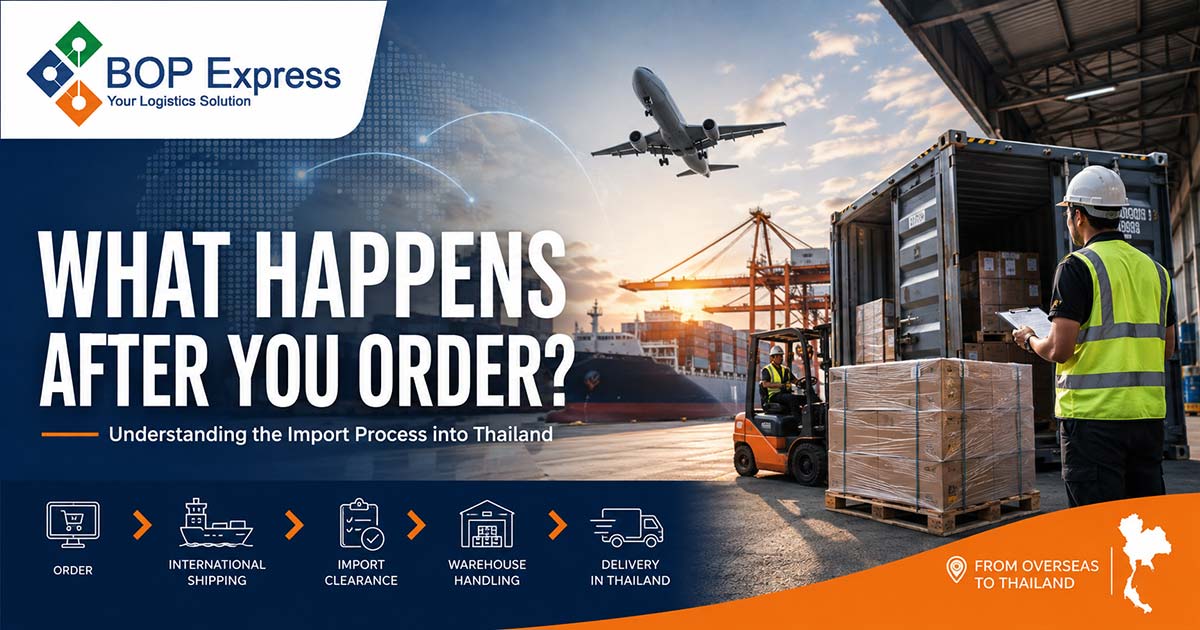
Ordering products from another country has become easier than ever. A buyer can select a product, confirm an order, make payment, and arrange delivery within minutes.
However, when goods physically move from one country into Thailand, placing the order is only the beginning.
The shipment becomes part of an international logistics and import process involving transportation, shipping documents, customs requirements, taxes and duties where applicable, product regulations, cargo release, and final delivery.
Understanding these stages is particularly important for businesses importing commercial goods, raw materials, equipment, machinery, components, or products for resale.
Watch: What Happens When Goods Are Imported into Thailand?
The video above provides a simple overview of what happens after goods are ordered overseas and begin their journey into Thailand.
Behind what may appear to be a straightforward shipment is a coordinated process involving multiple parties—from the overseas supplier and carrier to the freight forwarder, customs authorities, customs broker, warehouse, and domestic transportation provider.
Ordering the Product Is Only the First Step
When a business purchases goods from an overseas supplier, several logistics decisions may already affect the shipment.
These can include:
- the country of origin
- product description and classification
- quantity and cargo dimensions
- transportation method
- Incoterms
- shipping documents
- import permits or certificates, where required
- customs duty and tax implications
- final delivery requirements
For this reason, businesses should consider logistics and customs requirements before the cargo departs from origin rather than waiting until it arrives in Thailand.
Step 1: The Goods Are Prepared for International Transportation
After an order is confirmed, the supplier prepares the goods for shipment.
Depending on the shipment, transportation may be arranged by air freight, sea freight, road transport, express service, or a combination of several transportation modes.
The appropriate method depends on factors such as cargo size, weight, urgency, origin, destination, cost considerations, and product characteristics.
At this stage, accurate shipment information is important because it will also be used in later logistics and customs processes.
Step 2: Import Documents Need to Be Prepared
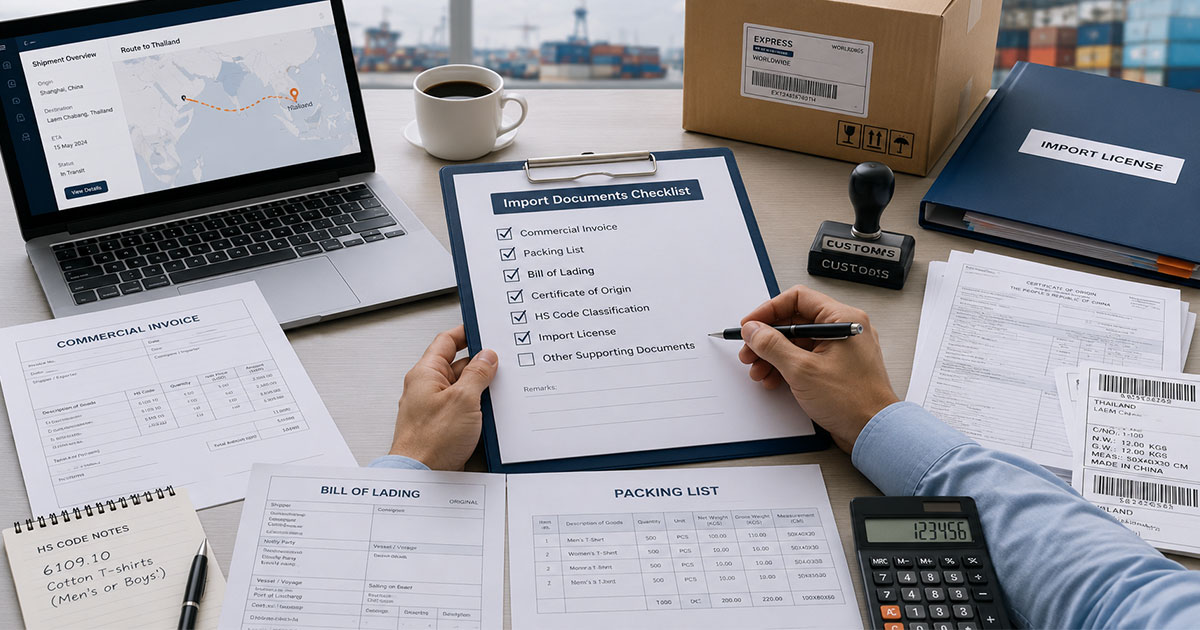
International shipments normally require supporting documentation.
Common documents may include:
- Commercial Invoice
- Packing List
- Bill of Lading or Air Waybill
- Certificate of Origin, where applicable
- import licence or product-specific permit, where required
- additional certificates or supporting documents depending on the type of goods
The exact requirements can vary considerably depending on the product, HS Code, origin country, shipment value, trade terms, and applicable regulations.
Incorrect or inconsistent information across these documents can create additional work during customs clearance.
Step 3: The Shipment Arrives in Thailand
When the cargo reaches a Thai port, airport, border checkpoint, or other applicable customs-controlled area, it cannot simply be moved directly to the buyer’s warehouse.
The goods must follow the relevant import procedures.
This is where customs information, product classification, customs value, applicable duties and taxes, permits, and supporting documents become important.
Step 4: Customs Clearance Begins
Customs clearance is one of the key stages of importing goods into Thailand.
The importer or appointed customs representative prepares the required information and import declaration based on the shipment.
Customs-related considerations can include:
HS Code
Goods need to be classified under an appropriate customs tariff classification.
The HS Code can affect duty rates, regulatory requirements, and documentation.
Customs Value
Customs authorities use customs valuation principles to determine the value used for customs purposes.
The Customs Department explains that transaction value is generally the primary valuation method, subject to the required adjustments and conditions.
Duties and Taxes
Depending on the product and applicable rules, imported goods may be subject to customs duty, VAT, excise tax, or other charges.
Restricted or Controlled Goods
Some products may require approval, registration, licences, certificates, or permission from relevant government agencies before they can be imported.
This is why identifying the exact product before shipment is important.
Step 5: Customs Review and Cargo Release
Once the declaration and required supporting information have been submitted, the shipment proceeds through the applicable customs process.
Some shipments may require additional document review, clarification, inspection, or coordination depending on the cargo and customs requirements.
When all relevant procedures have been completed and the shipment is released, the cargo can continue to the next stage.
Step 6: Delivery to the Final Destination
Customs clearance does not necessarily mark the end of the logistics process.
The cargo may still need to be:
- collected from the port, airport, or terminal
- transferred to a warehouse
- unloaded or deconsolidated
- transported by truck
- delivered to a factory, distribution centre, warehouse, project site, or other destination
For businesses, these stages need to be coordinated with the overall supply chain so that goods arrive at the right location and according to the required schedule.
Why Should Import Requirements Be Checked Before Shipping?
One common problem in international logistics is beginning the shipment before checking import requirements.
Potential issues may include:
- incomplete documents
- inaccurate product descriptions
- incorrect or uncertain HS Codes
- missing import licences
- inconsistent information between documents
- unexpected customs duties or taxes
- delays while additional information is requested
- additional storage or logistics costs
Many of these risks can be reduced by reviewing the shipment before the cargo leaves the country of origin.
Where Does a Freight Forwarder or Customs Broker Fit into the Process?
International logistics involves more than physically transporting cargo.
A freight forwarder can coordinate transportation between origin and destination, while customs clearance specialists assist with customs documentation, declarations, regulatory coordination, and cargo release procedures.
For businesses dealing with recurring imports or more complex cargo, having these activities coordinated through an experienced logistics provider can help create a clearer and more manageable import process.
BOP Express and Import Logistics Support
BOP Express provides international logistics support covering freight forwarding, customs clearance, documentation coordination, air freight, sea freight, cross-border transportation, and cargo delivery.
BOP Express is also listed by the Thai Customs Department as an Authorized Economic Operator (AEO), reflecting its participation in Thailand’s customs compliance and supply-chain security framework.
For businesses planning to import goods into Thailand, reviewing logistics arrangements, shipment documentation, product requirements, and customs procedures before shipping can help reduce unnecessary complications later in the process.
Planning an import shipment to Thailand?
BOP Express can support your business in reviewing transportation arrangements, import documentation, customs clearance requirements, and delivery planning from origin through final destination.