For businesses shipping goods internationally by sea, one of the first decisions is whether to use FCL or LCL.
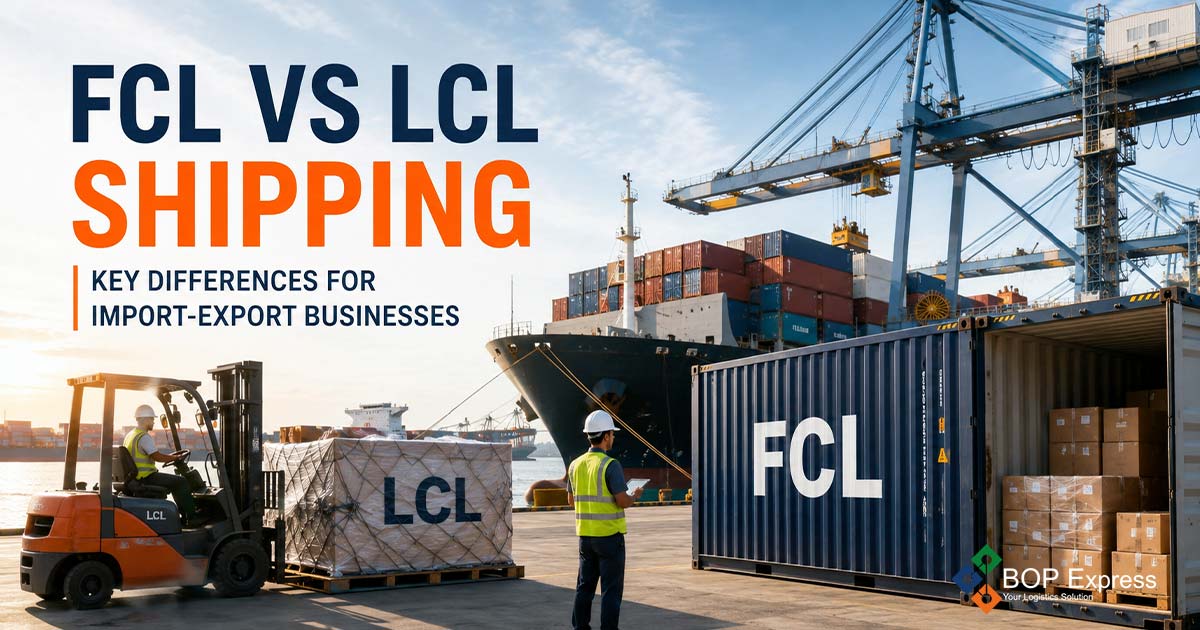
FCL stands for Full Container Load, while LCL stands for Less than Container Load. Both are widely used for international sea freight, but they operate differently and can affect transportation cost, cargo handling, transit planning, and overall supply chain efficiency.
The right choice is not simply based on whether the cargo can physically fill a container.
A business should consider shipment volume, cargo characteristics, required delivery date, handling requirements, shipping frequency, and the total logistics cost at both origin and destination.
This guide explains the differences between FCL and LCL shipping and the main factors businesses should evaluate before choosing between them.
What Is FCL Shipping?
FCL, or Full Container Load, generally means that one shipper uses a container for its own shipment.
This does not necessarily mean that the container must be filled to its maximum capacity.
A company may choose FCL even when there is some unused space inside the container because it wants exclusive use of the container or because the overall logistics cost makes FCL commercially reasonable.
Common container sizes used in international shipping include different types and dimensions depending on the cargo and route. The appropriate container should therefore be selected according to the actual shipment requirements.
With FCL, the cargo is normally loaded into a dedicated container and the container moves through the sea freight process without being consolidated with cargo belonging to unrelated shippers.
What Is LCL Shipping?
LCL, or Less than Container Load, is commonly used when a shipment does not require an entire container.
Cargo from several shippers may be consolidated into one container at the origin and separated again at the destination.
Each shipper pays for the portion of the transportation service associated with its cargo rather than reserving the entire container.
This can make LCL practical for smaller shipments, regular replenishment orders, samples, spare parts, or businesses that do not want to wait until enough cargo has accumulated for an FCL shipment.
However, LCL involves additional consolidation and deconsolidation processes. Businesses should therefore consider more than the basic ocean freight rate when comparing the two options.
FCL vs LCL: The Main Differences
1. Use of Container Space
The most obvious difference concerns how container capacity is used.
With FCL, the container is allocated to one shipper’s cargo.
With LCL, cargo space is shared with shipments from other businesses.
For smaller volumes, reserving an entire container may not be economically necessary. In this case, LCL can allow a business to move cargo without waiting for enough goods to fill a container.
For larger volumes, however, businesses should compare the total LCL cost with the cost of using a dedicated FCL container.
There is no universal shipment volume at which one option automatically becomes better than the other.
The decision should be based on an actual quotation for the relevant origin, destination, shipment dimensions, and shipping period.
2. Freight Cost Structure
FCL and LCL are priced differently.
FCL quotations generally relate to the use of a container together with applicable origin, ocean freight, destination, documentation, and other logistics charges.
LCL pricing is commonly influenced by the shipment’s volume, weight, and applicable minimum charges, together with consolidation, handling, documentation, and destination-related costs.
This is why a shipment that appears small may not always result in a proportionally small total logistics cost.
Businesses should compare the total landed logistics cost, not only the headline ocean freight rate.
Important cost components may include:
- Origin handling
- Export customs-related charges
- Consolidation charges
- Ocean freight
- Documentation fees
- Destination handling
- Deconsolidation charges
- Import customs clearance
- Port or terminal-related charges
- Inland transportation
- Storage or additional handling where applicable
A lower basic freight rate does not necessarily mean a lower final logistics cost.
3. Cargo Handling
FCL cargo generally undergoes fewer consolidation-related handling steps because the container is dedicated to one shipment.
LCL cargo needs to be received at a consolidation facility, grouped with other cargo, loaded into a shared container, transported, unloaded at destination, and separated before release.
Additional handling does not automatically mean that LCL is unsuitable. It simply means that cargo packaging and handling requirements become particularly important.
Businesses shipping fragile, sensitive, high-value, unusually shaped, or difficult-to-stack cargo should discuss these characteristics before selecting LCL.
4. Transit and Delivery Planning
FCL and LCL shipments may have different operational timelines even when they move on similar ocean routes.
An LCL shipment can require additional time for:
- Receiving cargo at the consolidation warehouse
- Consolidation before container loading
- Coordination with other shipments
- Deconsolidation at destination
- Cargo release after separation
FCL may avoid some of these consolidation steps, but the overall transit still depends on vessel schedules, port conditions, customs procedures, container availability, and inland transportation.
Businesses should therefore ask for the expected door-to-door lead time, not only the vessel sailing time.
5. Shipment Flexibility
LCL can provide greater flexibility for businesses that ship smaller quantities frequently.
Instead of waiting until enough inventory has accumulated to justify an FCL shipment, the business may ship smaller quantities according to demand.
This can be useful when:
- Inventory levels need regular replenishment
- Product demand changes frequently
- Storage space is limited
- The business wants to reduce the amount of inventory held at one time
- Suppliers produce goods in smaller batches
FCL may be more suitable when a business ships larger quantities on a predictable schedule.
Neither model is automatically more efficient. The appropriate choice depends on how transportation fits into the company’s inventory and supply chain strategy.
6. Cargo Control and Separation
An FCL container normally carries cargo belonging to one shipper, which can provide greater control over how the available container space is used.
With LCL, the cargo shares container space with goods from other shippers.
For this reason, packaging is especially important.
Cargo should be packed to withstand normal international transportation, warehouse handling, stacking where applicable, and movement during loading and unloading.
Businesses should also provide accurate information if their cargo:
- Cannot be stacked
- Requires upright handling
- Is fragile
- Contains liquids
- Contains batteries
- Includes regulated or restricted materials
- Has temperature requirements
- Has unusual dimensions
These characteristics may affect whether an LCL service can accept the cargo and how it should be handled.
When Should Businesses Consider FCL?
FCL may be worth considering when:
- Shipment volume is relatively large
- Regular shipments are sufficient to justify dedicated containers
- The business wants exclusive use of the container
- Cargo requires more controlled loading arrangements
- The total FCL cost is competitive with the equivalent LCL option
- Cargo characteristics make consolidation less practical
- The shipment is part of a predictable purchasing or production schedule
A company does not need to fill every available space inside a container before considering FCL.
The relevant question is whether using the dedicated container makes operational and commercial sense for that shipment.
When Should Businesses Consider LCL?
LCL may be appropriate when:
- The shipment is too small to justify reserving a complete container
- The company imports or exports smaller quantities regularly
- Inventory is required before enough goods accumulate for FCL
- The business wants to test a new supplier or market with a smaller shipment
- Spare parts, samples, or smaller commercial orders need to be transported
- The company wants more flexibility in shipment frequency
LCL can also support businesses that prefer smaller, more frequent inventory replenishment instead of importing large quantities at one time.
However, businesses should consider the complete cost and operational timeline, including origin consolidation and destination deconsolidation.
Is LCL Always Cheaper Than FCL?
No.
LCL can be economical for smaller shipments because the shipper does not reserve an entire container.
However, as shipment volume increases, the combined LCL freight, consolidation, handling, and destination charges may approach or exceed the cost of FCL.
Rates can also change according to:
- Shipping route
- Season
- Carrier capacity
- Port conditions
- Cargo volume and weight
- Origin and destination
- Cargo characteristics
- Required service scope
Businesses approaching the point where LCL and FCL costs become similar should request both options and compare the complete quotations.
This is more reliable than relying on a fixed CBM rule.
Does FCL Always Arrive Faster Than LCL?
Not necessarily.
FCL can involve fewer consolidation-related procedures, which may simplify parts of the logistics process.
However, actual delivery time depends on many other factors, including:
- Vessel departure schedule
- Port congestion
- Transshipment arrangements
- Customs clearance
- Documentation
- Container availability
- Terminal operations
- Inland delivery arrangements
An FCL shipment on an unsuitable route may not necessarily arrive earlier than an LCL shipment using a more suitable sailing schedule.
Businesses should compare the expected door-to-door timeline for the specific shipment.
How Cargo Volume Affects the Decision
Cargo volume is one of the most important factors in choosing between FCL and LCL, but it should not be considered in isolation.
Businesses should provide accurate package dimensions because LCL pricing is often affected by the volume occupied by the cargo.
Important information includes:
- Number of packages
- Package dimensions
- Gross weight
- Packaging type
- Stackability
- Cargo description
Incorrect dimensions can produce an inaccurate comparison between LCL and FCL.
For example, a shipment that was originally estimated to be relatively small may become significantly larger once the final packaging is completed.
Accurate cargo information therefore helps the freight forwarder assess both options more effectively.
What Businesses Should Compare Before Making a Decision
Before selecting FCL or LCL, businesses should compare the following.
Shipment Volume
How much space does the cargo actually require after final packaging?
Total Transportation Cost
Compare the complete origin-to-destination cost rather than only the ocean freight component.
Required Delivery Date
Consider consolidation, sailing schedules, customs clearance, and final delivery.
Cargo Characteristics
Assess fragility, value, dimensions, stackability, regulated content, and special handling requirements.
Shipment Frequency
A business shipping smaller quantities every month may make a different decision from one shipping large volumes several times per year.
Inventory Strategy
Consider whether the business prefers larger inventory replenishments or smaller, more frequent shipments.
Customs and Documentation
Both FCL and LCL shipments require appropriate commercial and customs documentation.
Incomplete documents can delay either shipping method.
Information to Prepare Before Requesting an FCL or LCL Quote
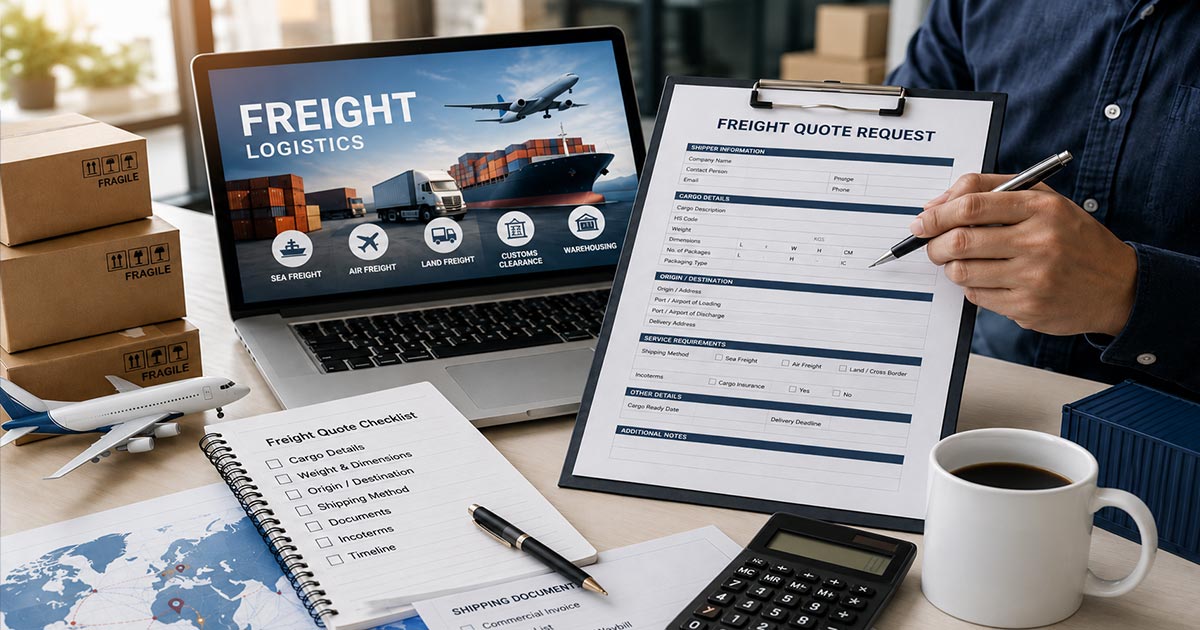
Businesses should prepare:
- Origin
- Destination
- Cargo-ready date
- Product description
- Number of packages
- Dimensions of each package
- Gross weight
- Packaging type
- Whether cargo can be stacked
- Commercial value
- Country of origin
- Incoterms, if available
- Required delivery location
- Customs clearance requirements
- Special cargo characteristics
- Commercial invoice and packing list, where available
With this information, a freight forwarder can compare possible FCL and LCL arrangements more accurately.
How a Freight Forwarder Supports the FCL vs LCL Decision
A freight forwarder can help businesses compare more than the basic ocean freight rates.
The review may include:
- Available FCL and LCL services
- Sailing schedules
- Cargo volume and weight
- Container requirements
- Consolidation arrangements
- Origin charges
- Destination charges
- Customs coordination
- Inland transportation
- Expected door-to-door lead time
The objective should be to select a shipping arrangement that fits the actual operational requirement rather than automatically choosing the lowest visible freight rate.
Conclusion
FCL and LCL are both important sea freight options, but they serve different shipment requirements.
FCL provides dedicated container use and can be suitable for larger or more controlled shipments.
LCL allows businesses to move smaller cargo volumes without reserving an entire container and can provide greater flexibility for frequent replenishment.
The right decision depends on more than cargo volume.
Businesses should evaluate:
- Shipment size
- Total logistics cost
- Cargo characteristics
- Handling requirements
- Required delivery date
- Shipment frequency
- Inventory strategy
- Customs readiness
- Origin and destination arrangements
When shipment volume approaches the point where both options appear commercially viable, comparing actual FCL and LCL quotations is usually more useful than relying on a fixed rule.
Accurate cargo information is essential for making that comparison.
Frequently Asked Questions
Does FCL mean the container must be completely full?
No. FCL generally means that the container is allocated to one shipper’s shipment. The business may choose FCL even if some container space remains unused.
Is LCL suitable for small import shipments?
It can be. LCL is commonly used for shipments that do not require a complete container, but businesses should evaluate the full origin-to-destination cost and handling requirements.
At how many CBM should a business switch from LCL to FCL?
There is no universal CBM threshold that applies to every route and shipment. Businesses should compare actual FCL and LCL quotations because rates and local charges vary.
Which is safer, FCL or LCL?
The appropriate option depends on the cargo. FCL generally involves fewer consolidation-related handling steps, while LCL cargo shares space with other shipments. Proper packaging and accurate cargo information are important for both.
Which is faster, FCL or LCL?
FCL may involve fewer consolidation processes, but actual delivery time depends on sailing schedules, ports, customs, routing, documentation, and inland transportation. The expected door-to-door lead time should be compared for each shipment.